
Suitability
Heat pump vs gas boiler: cost, running costs and comfort compared
Published · Written by Towsty Editorial Team
If you’ve been weighing up whether to switch from gas to a heat pump, you’ll have noticed the comparisons online fall into two camps. Some promise you’ll halve your bills. Others treat the whole idea with suspicion. Neither is particularly useful if you just want to know whether this makes sense for your home.
Here’s the honest version: real 2026 figures, laid out side by side, with the trade-offs named rather than hidden. By the end, you should know whether a heat pump is the rational choice for your home right now, and when a new gas boiler genuinely is. Last checked: October 2026.
The short answer
A new gas boiler is cheaper to install. A heat pump is cheaper to run, longer lasting, about four times more efficient and much lower carbon, provided your home is suitable and the system is installed properly. On installed cost after the £7,500 Boiler Upgrade Scheme grant, a boiler still comes out ahead by about £2,600. On almost every other measure that matters over the life of the system, a heat pump wins.
Whether it wins for you depends on your home, your boiler’s current age, and whether you’d rather plan the switch or be forced into one when the boiler fails in January.

| Factor | Gas boiler | Heat pump |
|---|---|---|
| Installed cost (UK average) | About £3,300 | About £13,441 before the grant, about £5,941 after the £7,500 grant |
| Annual running cost (medium-use home) | About £770 | About £630 at 22p/kWh |
| Efficiency | 84% | SPF 3.4 (equivalent to 340%) |
| Typical lifespan | 10–15 years | 15–20 years |
| Annual service | £120–£180 | £150–£250 |
| Space needed | Combi fits in a cupboard | Outdoor unit plus a hot water cylinder |
| Noise | Near silent (flue aside) | Around 40 dB, roughly fridge level |
| CO₂ per unit of heat | Higher | About 75% lower |
| VAT on installation | 20% | 0% until 31 March 2027 |
Figures are current to October 2026 and reflect the assumptions Towsty’s estimate tool uses. More detail on every row below.
Installed cost compared
A new gas combi boiler costs roughly £3,300 to install for a typical UK home, ranging from about £2,300 for a smaller home in the North East to £4,500 for a larger one in London. The install itself is quick, usually a day or two, and most homes don’t need any additional work around it.
A heat pump install is a bigger project. The current UK average quote for an air source heat pump install is £13,441 before any grant is applied. Deduct the £7,500 Boiler Upgrade Scheme grant available to gas-heated homes in England and Wales, and the typical final figure drops to about £5,941. That still leaves a gap of roughly £2,600 against a new boiler, honestly.
Two things are worth factoring in, though. VAT is 0% on heat pump installations until 31 March 2027, after which it reverts to 5%, while a new gas boiler carries the standard 20%. And if you’re on oil or LPG rather than mains gas, the grant currently rises to £9,000 (until 31 March 2027), making the installed-cost gap much smaller.
For a full breakdown of what sits inside that heat pump install cost, and what moves it up or down, see our guide to how much a heat pump costs in 2026.
Annual running cost compared
This is the number most readers care about, so let’s walk through the honest version using 2026 rates.
A medium-use UK home uses roughly 11,500 kWh of gas a year for heating and hot water. At the current price-cap rate of 5.74p per kWh, plus the £106-a-year standing charge, that works out at around £770 a year on a modern gas combi boiler.
The same home with an air source heat pump delivering the same heat uses about a quarter as much energy, because a heat pump moves heat rather than burning fuel. Towsty’s estimates assume electricity at 22p per kWh (a blended rate that already allows for some cheaper off-peak use) and a Seasonal Performance Factor of 3.4, which comes from MCS 031a Issue 2.0, the industry standard for heat pump performance estimates. On those assumptions the running cost comes out at around £630 a year.
That’s roughly £140 a year cheaper than gas. Not the “half your bills” headline some comparison sites promise, but a real, consistent saving on top of all the other advantages. One caveat: a heat pump heats your hot water less efficiently than it heats your rooms, so in homes that use a lot of hot water the gap is smaller.
For a deeper look at what people are paying, including the tariff decisions that matter most, see our guide to heat pump running costs in 2026.
Efficiency compared, and why it matters
Gas and electricity cost different amounts per unit, so comparing them directly can mislead. What matters is how much heat you get out for the energy you put in.
A modern gas combi boiler is about 84% efficient. Burn 100 units of gas and you get 84 units of heat into the home; the rest escapes up the flue and through standing losses.
A modern air source heat pump runs at a Seasonal Performance Factor of 3.4. Use 100 units of electricity and it delivers 340 units of heat into the home. That’s not a typo; it’s how heat pumps work. They don’t burn electricity for heat; they use it to move heat from the outside air into your home.
That four-times efficiency advantage is what closes the gap between pricey electricity and cheap gas. It’s why the running-cost comparison tilts in favour of the heat pump, despite electricity costing nearly four times as much per kWh.
Lifespan and maintenance
A modern gas boiler typically lasts 10–15 years with proper annual servicing. A well-installed heat pump typically lasts 15–20 years on the same servicing schedule. That’s five extra years at the top end, which materially changes the lifetime cost comparison and is often left out of running-cost-only breakdowns.
Both need an annual service to keep warranties valid. Boiler services run £120–£180 a year on average. Heat pump services sit slightly higher at £150–£250, mostly because fewer engineers specialise in heat pumps today, a gap that’s narrowing as the installer market grows.
Space, noise and carbon
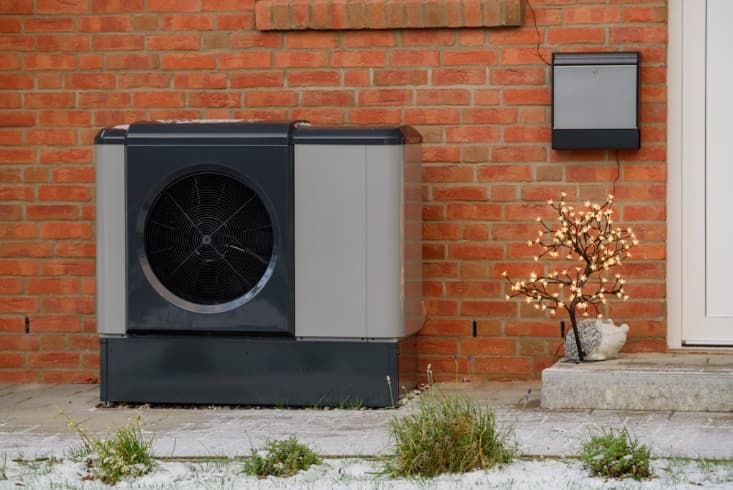
Space. A combi boiler disappears into a kitchen cupboard. A heat pump needs an outdoor unit (usually fitted against an outside wall) and an indoor hot water cylinder somewhere, often in an airing cupboard, loft or utility space. For most homes this is a design question rather than a dealbreaker, but if your current boiler is a combi and you have no obvious cylinder space, this is the point most people get stuck on.
Noise. Boilers are near-silent in use. Modern air source heat pumps run at around 40 dB measured at a sensible distance, roughly the level of a fridge, and within the limits the industry’s noise standards require. The old reputation for noisy heat pumps belongs to a generation of equipment that’s largely gone.
Carbon. Gas is a fossil fuel: every unit burned releases CO₂. A heat pump runs on electricity, and because it delivers several units of heat for each unit it uses, it produces about 75% less CO₂ than a gas boiler for the same heat on today’s UK grid. As the grid keeps decarbonising, that gap widens over the system’s lifetime.
When a heat pump wins
A heat pump is the rational choice when:
- Your home is reasonably well insulated (modern cavity-walled stock, decent loft insulation, mostly double glazing)
- You’ve got space for an outdoor unit and a hot water cylinder
- You plan to stay in the home for at least five years
- Your boiler is mid-life or older (eight years and up)
- You’re on oil or LPG rather than mains gas (the maths tilts further in your favour, and the £9,000 grant helps even more)
- You care about carbon alongside cost, or you’d rather plan the switch than be forced into one when the boiler fails
For most UK homes meeting those conditions, a heat pump is the better long-term call.
When a new boiler is the rational choice
The honest flipside. A new gas boiler is the right choice when:
- You expect to sell the home within two or three years and won’t recover the upfront investment
- Your boiler has just failed in the middle of winter and you can’t be without heat for the weeks a proper heat pump install needs
- Your home has solid walls, no insulation and no budget to upgrade either; the running-cost advantage shrinks dramatically in a poorly insulated home
- You genuinely have no suitable space for an outdoor unit or a hot water cylinder
- You’re renting the property out short-term and the capital investment doesn’t fit the model
None of these are permanent conclusions. They’re just the honest cases where a boiler-shaped answer makes sense for your situation right now. For more on whether a heat pump could work in your home, see our guide to whether your home is suitable for a heat pump.
Replace now, or wait for the boiler to fail?
This is the bit most comparisons skip, so it’s worth sitting with for a moment.
If your boiler is working fine, there’s a natural temptation to wait until it dies before deciding. The problem with waiting is that it removes most of your choices. A boiler failing on a January morning doesn’t give you four to eight weeks to project-manage a heat pump install, compare quotes and apply for the grant. It gives you about 48 hours before you need heat and hot water back, which almost always means another gas boiler.
There are also time-limited incentives in favour of acting sooner rather than later. The 0% VAT on heat pump installations ends on 31 March 2027. The £9,000 grant for oil and LPG homes ends on 31 March 2027. And the Boiler Upgrade Scheme itself runs on an annual budget, so the rules and amounts available in a future year may be different.
Set against those: your current boiler might have five more years of reliable service in it, and switching too early means walking away from working equipment.
The sensible middle ground, for most people with a working-but-ageing boiler, is to get a free estimate now and plan the switch within the next 12–24 months, on your timeline, while the grant and VAT advantages are still in place, rather than at 7am on a cold Tuesday with no choice.
What changes with a heat-pump-specific tariff
Standard electricity tariffs charge the same rate for every hour of the day. Several UK suppliers now offer tariffs designed for heat pump homes, with much cheaper electricity overnight, when a heat pump can be set to pre-warm the home or heat the hot water cylinder, and standard rates during the day.
These tariffs typically need a smart meter and a reasonably modern heat pump setup. For a well-designed system, they can push the effective price of your electricity below the 22p used above, and widen the saving against gas accordingly.
It’s the single biggest lever on real-world heat pump running costs. If a comparison skips over tariffs entirely, it’s missing an important part of the maths.
Frequently asked questions
Is a heat pump cheaper to run than a gas boiler? Usually, yes, but by a modest amount. For a medium-use home at 2026 rates, Towsty’s assumptions put a heat pump at around £630 a year against £770 for gas, a saving of roughly £140. A heat-pump tariff with cheap off-peak hours can widen that gap. It isn’t “half your bills”, but it’s a real saving on top of a longer lifespan and lower emissions.
Should I replace my gas boiler before it breaks? If your boiler is more than eight to ten years old, it’s worth planning the switch while you still have the choice. A failing boiler in deep winter removes your options and almost always forces another boiler. The 0% VAT on heat pump installs also ends on 31 March 2027, which argues for sooner rather than later for anyone considering the switch at all.
Will a heat pump heat my home as warmly as a gas boiler? Yes. A well-designed heat pump keeps your home at the same temperature as a boiler. It does so differently: steadier, gentler warmth across the day rather than short hot bursts. Most people adapt quickly, and many prefer it.
How long do heat pumps last compared to gas boilers? A modern gas combi boiler typically lasts 10–15 years. A well-installed heat pump typically lasts 15–20 years. That extra five years at the top end is one of the largest differences in a true lifetime-cost comparison.
Can I keep my gas boiler as a backup? Technically possible on some setups, but rarely sensible. A hybrid system costs more to install and is more complex to maintain, and a properly sized air source heat pump is designed to handle the coldest day of the year without any backup.
Is a heat pump still worth it if gas prices are low? Even if gas prices drop, a heat pump still wins on carbon and lifespan, and on the grant and 0% VAT while they last. Cheaper gas would narrow the running-cost comparison, but as the electricity grid keeps getting cleaner, the long-term direction still points towards heat pumps for most well-insulated homes.
For more on comfort, see our guide to how warm a heat pump will keep your house.
Related guides

Suitability
Is my home suitable for a heat pump? The honest answer
Most UK homes can stay warm with a heat pump. Some are ready now; others need a little prep. Here’s what a survey checks — and how to tell which yours is.
Read article
Costs & grants
How much does a heat pump cost in 2026? An honest guide for UK homeowners
Real 2026 heat pump costs by home size, before and after the £7,500 grant, what pushes the price up, and how to compare quotes like for like.
Read article
Costs & grants
Boiler Upgrade Scheme explained: grants in 2026
Current BUS grant amounts in 2026, who qualifies in England and Wales, the rules for oil and LPG homes, and how the discount reaches your invoice.
Read article